
AI British Columbia Real Estate Forms & Disclosure Guide
Get disclosure and forms guide - just enter transaction type, property type, role (buyer/seller/agent).
British Columbia Real Estate Forms & Disclosure Guide
This guide provides a complete checklist and explanation of the primary disclosure forms, agency disclosures, strata documents, and transaction sequence required for residential real estate transactions in British Columbia. It is designed for use by buyers, sellers, and licensees under the oversight of the BC Financial Services Authority (BCFSA) and in accordance with the Real Estate Services Act (RESA), Strata Property Act, and common law.
[[Property Address]]
Transaction Type: [[Purchase / Sale / Listing]]
Parties: [[Seller Name(s)]] and [[Buyer Name(s)]]
Listing Brokerage / Licensee: [[Brokerage Name]] / [[Licensee Name]]
Date of Guide Use: [[Guide Date]]
1. Key Governing Authorities
1. Real Estate Services Act (RESA) and regulations, governs licensing, conduct, and agency disclosure obligations for real estate professionals.
2. Strata Property Act and regulations, governs disclosure and delivery of strata corporation records for strata lots.
3. Property Law Act and common law, imposes duties on sellers to disclose known material latent defects.
4. BCFSA rules and BCREA standard forms, provide the practical forms and recommended practices used province-wide.
5. Residential Tenancy Act, additional rules apply when property is tenanted at time of sale.
2. Core Disclosure Documents Checklist
Use this table to track required and recommended disclosures for a typical residential resale. Mark each item as provided, N/A, or pending.
| # | Form / Disclosure | Required / Recommended | Delivered By | To Whom | Timing |
|---|---|---|---|---|---|
| , - | , , , , , - | , , , , , , | , , , , | , , - | , , |
| 1 | Property Disclosure Statement (PDS) | Recommended / expected | Seller | Buyer (via agents) | Before subject removal |
| 2 | Working With a REALTOR® (Agency Disclosure) | Required at first substantive contact | Licensee | All parties | Immediately upon contact |
| 3 | Strata Form B, Information Certificate | Required for strata | Strata corporation | Buyer via seller | Before subject removal |
| 4 | Strata Form F, Certificate of Payment | Required for strata | Strata corporation | Buyer via seller | Before completion |
| 5 | Depreciation Report (Reserve Fund Study) | Required (most stratas) | Strata corporation | Buyer | Upon request, before subjects removed |
| 6 | Strata meeting minutes (last 2 years) | Recommended | Strata via seller | Buyer | Before subjects removed |
[[PDS Status]]
[[Agency Disclosure Status]]
[[Form B Status]]
[[Form F Status]]
3. Property Disclosure Statement (PDS)
The Property Disclosure Statement is the primary seller disclosure document used in British Columbia residential transactions.
1. The PDS is typically a BCREA or brokerage-specific form in which the seller answers questions about the property's physical condition, systems, known problems, past repairs, and other material matters.
2. The seller must complete the PDS to the best of their knowledge and belief. "Unknown" is an acceptable response when the seller genuinely has no information.
3. The PDS is not a warranty. It is a snapshot of the seller's knowledge at the time of completion.
4. The seller has a continuing duty to update the PDS if new material information becomes known before completion.
5. Delivery: Provide the PDS to the buyer as early as possible and in any event before the buyer removes subjects or is asked to proceed without conditions.
[[Seller Name(s)]] completed the PDS on [[PDS Completion Date]]. A copy is attached as Exhibit A.
Buyers should read the entire PDS, note any "Unknown" answers or "Yes" answers indicating issues, and follow up in writing. Professional home inspection is strongly recommended regardless of PDS content.
4. Strata Property Act Disclosures (Strata Lots Only)
When the property is a strata lot, the Strata Property Act imposes specific document delivery requirements.
1. Form B Information Certificate, provides current strata fees, special levies, contingency reserve fund balance, bylaws, rules, and any known or anticipated major issues or projects.
2. Form F Certificate of Payment, confirms the strata lot account is current or shows any arrears or prepayments. Required to ensure clear title on completion.
3. Depreciation Report (Section 94), long-term reserve fund study projecting repair/replacement costs over 30 years. Most strata corporations must maintain one.
4. Recent strata council and general meeting minutes (typically last 24 months).
5. Current strata budget, financial statements, and any engineer's reports or building envelope studies.
The seller and listing agent are responsible for obtaining these documents from the strata corporation promptly. Delays in obtaining Form B or F are common and can affect transaction timelines.
[[Strata Lot Number]]
Strata Plan Number: [[Strata Plan Number]]
Strata Corporation Name: [[Strata Corporation Name]]
5. Agency Relationship Disclosure
Under RESA, every licensee must provide clear written disclosure of the agency relationship at the first substantive contact with a prospective client or customer.
1. The standard form is "Working With a REALTOR®" (or current BCFSA-approved version).
2. The form explains whether the licensee represents the buyer, the seller, or both (limited dual agency) and the duties owed.
3. Disclosure must occur before the licensee provides advice or receives confidential information.
4. Both parties must receive and acknowledge the disclosure. Limited dual agency requires separate informed written consent from each party.
5. The brokerage retains the signed disclosure in its records.
[[Buyer Name(s)]] received the Working With a REALTOR® disclosure on [[Agency Disclosure Date]] from [[Licensee Name]] of [[Brokerage Name]].
Failure to provide timely agency disclosure can result in regulatory action and may affect the validity of any advice given.
6. Latent Defect and Material Fact Disclosure
Sellers and their agents have specific duties regarding defects that are not visible on reasonable inspection.
1. A material latent defect is one that renders the property dangerous, unfit for habitation, or substantially affects its value or use, and that would not be discoverable by a reasonable buyer inspection.
2. The seller must disclose known material latent defects even if the purchase contract contains an "as is" clause.
3. Examples include: major structural failure, undisclosed illegal suites or additions, contamination, severe water damage, or non-permitted work affecting habitability.
4. Patent (obvious) defects are generally the buyer's responsibility unless actively concealed by the seller.
5. Listing agents who have actual knowledge of a material latent defect must ensure disclosure; they cannot rely solely on the seller's PDS answers.
Seller represents that, to the best of Seller's knowledge, the only known material latent defects are those disclosed in the PDS and in writing as follows: [[Known Latent Defects or "None"]].
7. Other Required or Recommended Disclosures
1. Death on the property (if known and material to value or desirability).
2. Flood, earthquake, or other natural hazard risk (increasingly important in many BC areas).
3. Presence of methamphetamine or other contamination (specific disclosure duties apply).
4. Tenancy details including current rent, security deposit, and lease terms when the property is tenanted.
5. Any known or pending special levies, lawsuits, or major repairs affecting the strata corporation.
6. Compliance with municipal bylaws, building permits, and zoning.
All disclosures should be in writing and delivered before the buyer removes subjects.
8. Recommended Transaction Completion Sequence
Follow this order for a typical BC residential purchase with subjects. Adjust for cash deals or unconditional offers.
1. Initial contact and agency disclosure delivered and signed by all parties.
2. Seller completes and delivers PDS to buyer.
3. Buyer receives and reviews PDS, strata documents (Form B, F, depreciation report, minutes), title search, and any other disclosures.
4. Buyer conducts home inspection, strata document review, and any other due diligence (financing, appraisal, insurance).
5. Buyer submits written questions to seller about any PDS or document concerns; seller responds in writing.
6. Parties negotiate and remove subjects in writing by the subject removal deadline.
7. Updated disclosures provided if new material information arises after initial delivery but before completion.
8. Final walkthrough and confirmation that all documents and keys will be available on completion.
9. Completion and possession as set out in the contract of purchase and sale.
[[Subject Removal Deadline]]
[[Completion Date]]
[[Possession Date]]
9. NWMLS / U.S. Equivalent Comparison Notes
British Columbia disclosure practices differ from many U.S. MLS systems (such as NWMLS in Washington state).
1. BC relies primarily on the seller-completed PDS rather than a mandatory seller disclosure form statute in every case.
2. Strata documents (Form B/F) have no direct U.S. HOA equivalent in simplicity; the process is more formal and time-sensitive.
3. Agency disclosure is standardized province-wide via the Working With a REALTOR® form; U.S. practices vary more by state and brokerage.
4. Latent defect disclosure is driven by common law and RESA rather than a uniform seller disclosure statute like those in many U.S. states.
5. No province-wide "natural hazard disclosure" form equivalent to California's NHD, but specific hazards must still be disclosed if known and material.
Buyers and licensees coming from U.S. markets should allow extra time for strata document collection.
10. Consequences of Non-Compliance
1. Buyer may have grounds to terminate before completion or claim damages after closing.
2. Seller may be liable for misrepresentation, breach of contract, or failure to disclose latent defects.
3. Licensee may face BCFSA complaint, investigation, monetary penalty, or licence suspension.
4. Strata corporations that unreasonably delay delivery of Form B or F can cause transaction failures.
11. Best Practices for All Parties
1. Use only current, officially approved or BCREA forms.
2. Provide disclosures early and obtain written acknowledgment of receipt.
3. Document every disclosure delivery with date, method, and recipient.
4. For strata properties, request documents immediately upon listing or offer.
5. Encourage buyers to obtain independent legal review for complex or high-value transactions.
6. When in doubt, disclose more rather than less.
12. Official Resources
1. BC Financial Services Authority (BCFSA): bcfsa.ca (forms, licensee search, complaints).
2. British Columbia Real Estate Association (BCREA): bcrea.bc.ca (standard forms and contracts).
3. Land Title and Survey Authority of BC (LTSA): ltsa.ca.
4. Service BC or local government for property tax and bylaw information.
5. For tenanted properties: Residential Tenancy Branch (rtb.gov.bc.ca).
Always obtain the most current versions of forms directly from official or approved sources immediately before use., -
*Sample template, not legal advice. This guide summarizes general disclosure practices under British Columbia law as of June 2026. Requirements, forms, and BCFSA/BCREA guidance are subject to change. Users must verify all obligations against current statutes, regulations, and official forms. Consult a licensed British Columbia real estate professional and a lawyer or notary public for advice specific to any transaction. [[User / Agent Name]] acknowledges this is for reference only.*
Illustrative preview - your actual result is built from your inputs.
How it works.
British Columbia Real Estate Forms & Disclosure Guide: provide transaction type, property type, role (buyer/seller/agent) and get a complete disclosure and forms guide in minutes - including required disclosure forms, deadlines, agency disclosure rules. Free AI workflow, no signup required to preview.
 Wills, Estate & POA
California real estate disclosure/forms guide: required statutory disclosures (TDS, NHD, etc.), CAR forms, exemptions, role-specific duties.
What good looks like.
What it must include
- 01Statutory Transfer Disclosure Statement (TDS, Civ. Code sec. 1102), Natural Hazard Disclosure Statement (NHD), and required supplemental disclosures (lead-based paint for pre-1978, Mello-Roos, SB 800, Megan's Law database notice, death on property per sec. 1710.2, water-conforming/CO/smoke detectors)
- 02agency-relationship disclosure (AD form) and the CAR Residential Purchase Agreement (RPA)
- 03seller financing/transfer-fee disclosures
- 04exemptions (probate, trustee sales)
- 05role-specific obligations (buyer/seller/agent)
Signals of expertise
- ★Names the TDS, NHD, and CAR RPA forms, cites sec. 1102/sec. 1710.2 and Megan's Law/Mello-Roos disclosures, and distinguishes which disclosures apply by transaction type and who must deliver them
- ★lead-paint federal overlay
Common mistakes
- ×Generic disclosure list missing CA-specific TDS/NHD/Mello-Roos/Megan's Law
- ×ignoring exemptions
- ×not differentiating buyer/seller/agent duties
- ×outdated form references
 On the record
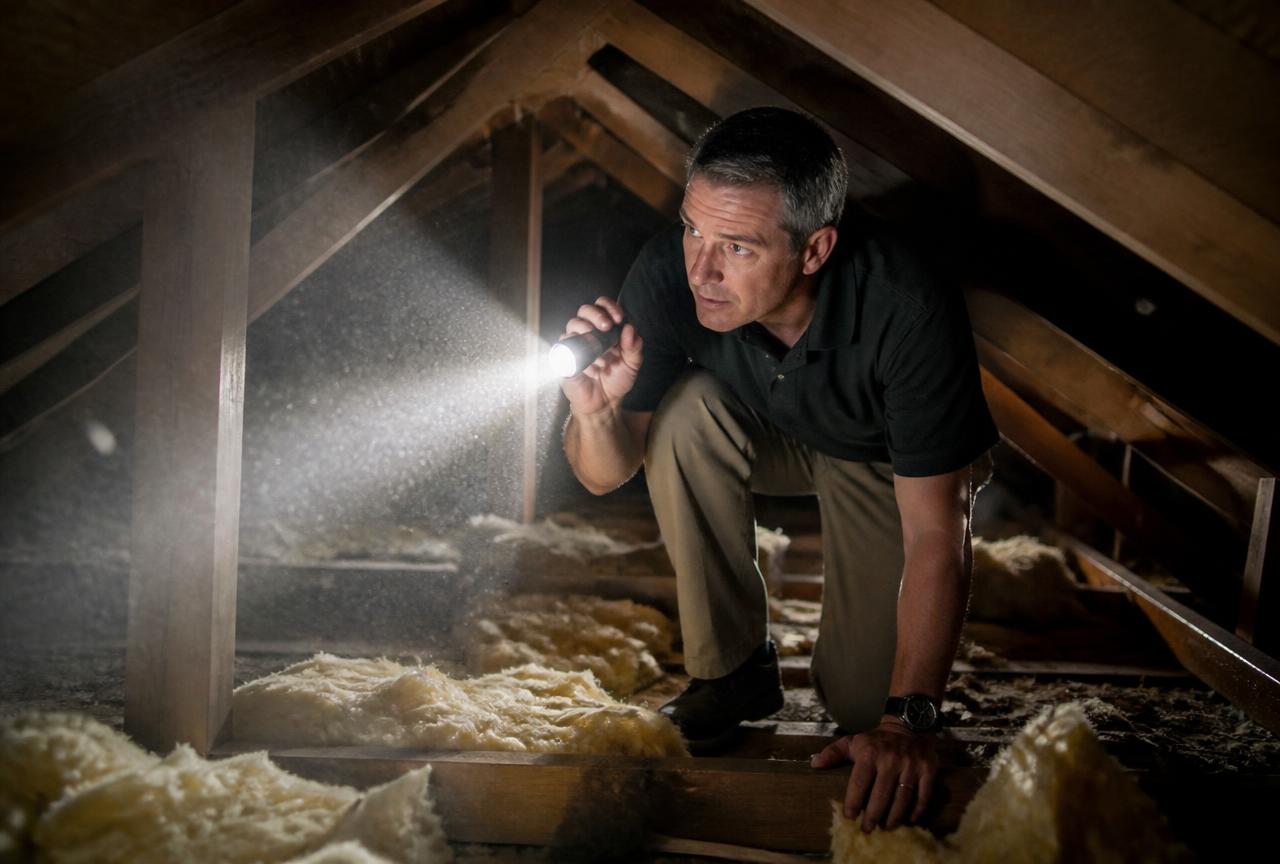 Nothing skipped
 Condition record
More in Wills, Estate & POA.
Real Estate Agent Bio
Get professional agent bio - just enter experience, niche, achievements.
Real Estate JV Agreement
Get JV agreement document - just enter partners, capital/work split, deal.
California Real Estate Forms & Disclosure Guide
Get disclosure and forms guide - just enter transaction type, property type, role (buyer/seller/agent).

Get your ready-to-use disclosure and forms guide in minutes.
Answer a few questions and download a ready-to-serve document today.