
AI Georgia Eviction Notice
Get Georgia eviction notice - just enter tenant, grounds, amounts owed.
Date of Notice: [[Date of Notice]]
TO (TENANT AND ALL OCCUPANTS):
[[Tenant 1 Full Legal Name]]
[[Tenant 2 Full Legal Name (if applicable)]]
And all other occupants
PREMISES:
[[Street Address, Unit Number]]
[[City]], Georgia [[ZIP Code]]
(the "Premises")
FROM (LANDLORD / AUTHORIZED AGENT):
Name: [[Landlord or Property Manager Full Legal Name]]
Address for notices: [[Landlord Notice Address]]
Phone: [[Landlord Phone]] | Email: [[Landlord Email]]
---
IMPORTANT: An eviction notice (demand for possession) is the first step. If the tenant does not vacate or cure as demanded, the landlord must file a dispossessory warrant in the Magistrate Court of the county where the property is located to obtain a judgment and writ of possession. Self-help evictions (lock changes, utility shutoffs, removal of property, threats) are illegal in Georgia and may result in liability.
---
1. Notice Type Selection and Georgia Law Summary
Pursuant to Georgia Code §44-7-50, before filing a dispossessory action the landlord must make a demand for possession (which may be written or oral). There is no mandatory statutory cure period for non-payment of rent; the landlord may proceed immediately after demand. For other lease violations, the landlord may issue a notice to vacate.
| Grounds | Notice Type | Minimum Notice / Demand | Cure Period | Key Statute |
|---|---|---|---|---|
| Non-payment of rent | Demand for Possession / Pay or Quit | Written or oral demand; proceed immediately after demand | None required by statute | O.C.G.A. §44-7-50 |
| Breach of lease (curable) | Notice to Cure or Vacate | Reasonable time per lease or notice | As stated in notice or lease | O.C.G.A. §44-7-50 et seq. |
| Breach that cannot be cured (illegal activity, nuisance, holdover) | Notice to Vacate / Unconditional | As stated; often 3-30 days depending on lease and facts | None | O.C.G.A. §44-7-50 |
| No-cause / end of term or MTM | Notice to Vacate | Per lease or 60 days for MTM termination under §44-7-7 | N/A | O.C.G.A. §44-7-7 |
After demand or notice, if tenant remains, file dispossessory in Magistrate Court. A dispossessory warrant is required to obtain court-ordered removal.
2. Detailed Demand Requirements and Best Practices (O.C.G.A. §44-7-50)
1. The demand for possession may be oral or written. A written demand provides the best proof for court.
2. The demand should clearly identify the parties, the Premises, the amount owed (if rent), and the consequence of non-compliance (filing of dispossessory).
3. For non-payment, Landlord is not required to give a cure period before filing. However, many landlords provide a short opportunity to pay to reduce court appearances.
4. For other breaches, the notice should specify the violation and give a reasonable time to cure or vacate as permitted by the lease and law.
5. Service should be documented. Acceptable methods include personal delivery, posting and mailing, or certified mail as allowed by the lease or court rules.
6. Keep copies of the notice, proof of service, lease, payment history, and communications.
3. Additional Occupants and Notice Scope
This notice applies to the named tenants and all other occupants of the Premises. Any person remaining after the deadline may be named in the dispossessory action.
4. Rent Arrears and Payment Instructions (Expanded)
This demand is for rent only. It does not include late fees, utilities, or other charges unless separately itemized and permitted.
Payment must be made in the form required by the lease: [[cash / check / money order / electronic to [[payment instructions]] ]].
Partial payments will not stop the filing of the dispossessory action unless Landlord agrees in writing to accept partial payment as full cure.
5. Consequences of Failure to Comply
If the tenant fails to comply with this demand or notice:
- Landlord will file a dispossessory warrant in the Magistrate Court of the county where the Premises is located.
- A hearing will be scheduled. Both parties may present evidence.
- If Landlord prevails, the court may issue a judgment for possession, rent, damages, and costs.
- A writ of possession may then be issued authorizing the sheriff or constable to remove the tenant and their belongings.
6. Prohibited Self-Help and Tenant Protections
Landlord shall not:
- Change the locks or otherwise lock out the tenant.
- Shut off utilities, water, or other essential services.
- Remove or interfere with the tenant's personal property.
- Use threats, harassment, or force.
Such actions are illegal and may expose Landlord to damages, penalties, and attorney fees.
7. Exhibits and Attachments
- Exhibit A: Copy of relevant lease pages
- Exhibit B: Rent ledger / accounting
- Exhibit C: Photos or move-in condition report (if relevant to breach)
- Exhibit D: Proof of prior notices (if any)
- Exhibit E: Proof of service of this notice
8. Signature and Certification (Expanded)
2. Demand for Possession - Non-Payment of Rent
Pursuant to O.C.G.A. §44-7-50
YOU ARE HEREBY NOTIFIED AND DEMANDED to pay the rent owing or surrender possession of the Premises to the Landlord.
Total rent owing as of the date of this notice: $[[Total Rent Owed]]
This demand covers rent only for the period(s):
| Rental Period | Monthly Rent | Amount Paid | Rent Arrears |
|---|---|---|---|
| [[Month/Period 1]] | $[[Rent]] | $[[Paid1]] | $[[Arrears1]] |
| [[Month/Period 2]] | $[[Rent]] | $[[Paid2]] | $[[Arrears2]] |
| TOTAL | $[[Total Rent Owed]] |
Demand: Pay the full amount of $[[Total Rent Owed]] immediately or vacate and surrender the Premises.
If you fail to pay or vacate immediately after this demand, Landlord will file a dispossessory action in Magistrate Court to recover possession, the rent owed, and all other remedies permitted by law, including costs and attorney fees if provided by lease or statute.
Deadline: Immediate upon service of this written demand. No statutory cure period applies for non-payment in Georgia.
3. Notice to Vacate - Lease Violation or Holdover
Grounds: [[Describe specific breach or holdover, e.g. "Failure to comply with pet policy / unauthorized occupants / damage to property / lease expiration without renewal"]]
YOU ARE HEREBY NOTIFIED to vacate and surrender possession of the Premises on or before [[Vacate Deadline Date]].
If you fail to vacate by the deadline, Landlord will immediately file a dispossessory warrant in the Magistrate Court of [[County]] County, Georgia.
4. Amount Owed (If Applicable)
This notice demands unpaid rent. Other charges (late fees, utilities, damages) may be pursued separately through the dispossessory action or small claims.
Total demanded to cure / avoid filing: $[[Total Amount Demanded]]
Payment instructions: [[Payment method and address per lease or as directed]]
5. Service and Proof of Service
This notice / demand was served on [[Service Date]] by:
[[Check one: Personal delivery to tenant / Posting in conspicuous place + mailing / Certified mail / Other method permitted]]
Server: [[Server Name / Process Server]]
Proof attached or to be filed with court: [[Signed acknowledgment / Affidavit of service / Certified mail receipt]]
6. Landlord Certification and Signature
I certify that the information above is true and that I have made the required demand for possession.
Landlord / Authorized Agent:
Signature: _______________________________ Date: [[Date Signed]]
Print Name: [[Landlord or Agent Name]]
Title: [[Owner / Property Manager / Agent]]
---
Note to Landlord: File the dispossessory warrant with the Magistrate Court promptly after the demand or notice period expires. Bring a copy of this notice, proof of service, the lease, ledger, and any other evidence. A hearing will be scheduled. Only a court order and writ of possession authorize removal of the tenant.
---
*Sample template for Georgia - not legal advice. Demand for possession required under O.C.G.A. §44-7-50 before dispossessory filing. No mandatory statutory cure period for non-payment; landlord may proceed immediately after demand. For lease violations, notice to vacate may be used. Dispossessory filed in Magistrate Court. Verify against current Georgia Code, the lease, and local court procedures as of 2026-06 before use. Self-help evictions are prohibited.*
Illustrative preview - your actual result is built from your inputs.
How it works.
Georgia Eviction Notice: provide tenant, grounds, amounts owed, property and get a complete georgia eviction notice in minutes - including correct notice type, statutory notice period, cure language. Free AI workflow, no signup required to preview.
 Leases & Tenancy
Statutory notice format per state unlawful-detainer law with proof of service; disclaim that court filing is required to evict.
What good looks like.
What it must include
- 01Correct notice type for the breach (e.g. Pay-or-Quit, Cure-or-Quit, Unconditional Quit, or no-cause/30-60-day) with statutory cure period
- 02full tenant names and premises
- 03itemized amount owed (rent only, not late fees in some states)
- 04exact deadline and date computation
- 05demand to pay or vacate
- 06landlord/agent signature and service method/proof of service
Signals of expertise
- ★Jurisdiction-correct cure days (e.g. 3-day pay-or-quit), proper service methods (personal/substituted/posting-and-mailing), excluding non-rent charges where prohibited.
Common mistakes
- ×Wrong notice period for the jurisdiction
- ×demanding amounts not legally recoverable
- ×no proof-of-service section
- ×using as a self-help eviction (it's only the predicate to filing)
 Delivered
 Statute aware
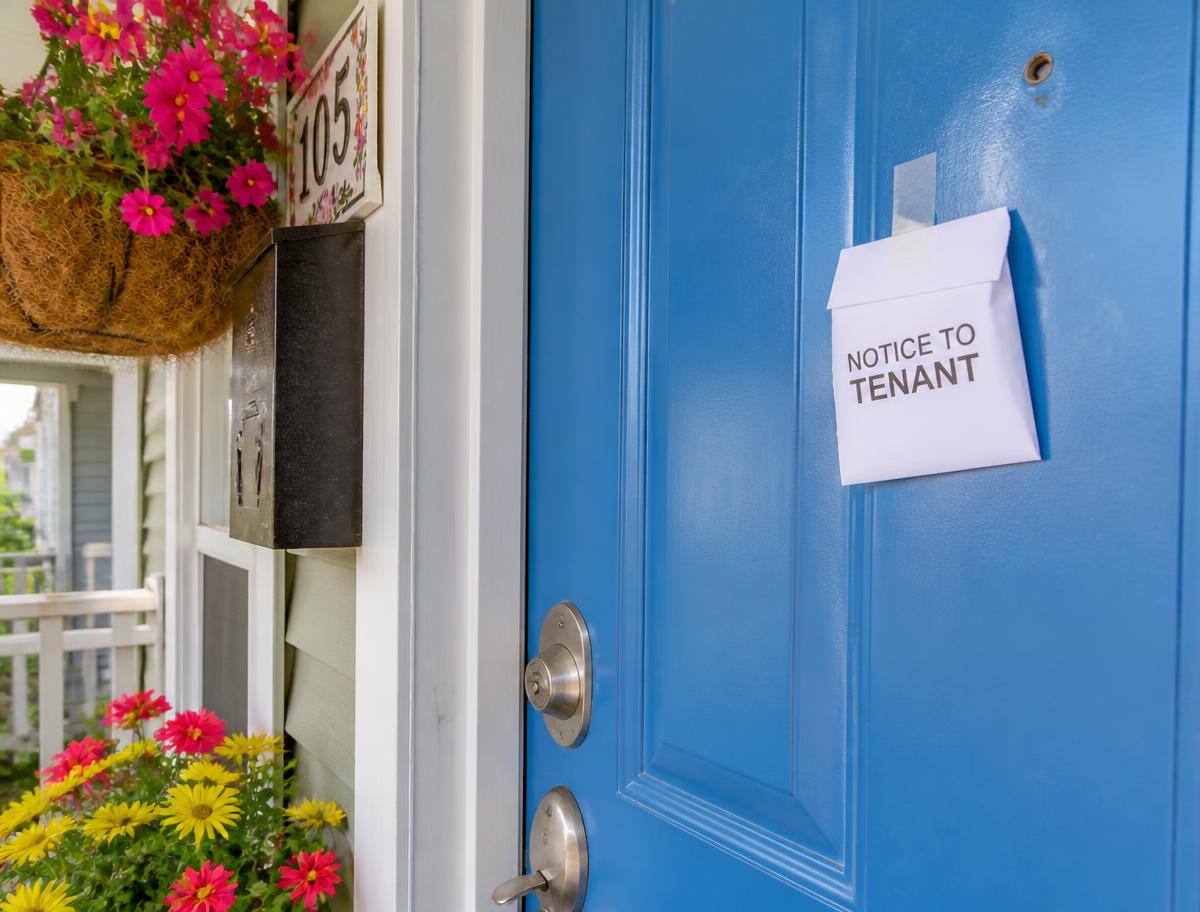 Posted
More in Leases & Tenancy.
Eviction Notice Drafter
Get formal eviction notice - just enter tenant details, amounts owed, jurisdiction.
Residential Rental Agreement
Get rental agreement document - just enter property, rent, parties.
Sublease Agreement
Get sublease agreement document - just enter original lease terms, sublessee, term.


Get your ready-to-use georgia eviction notice in minutes.
Answer a few questions and download a ready-to-serve document today.